

Healing Springs Natural Area Partners Meeting
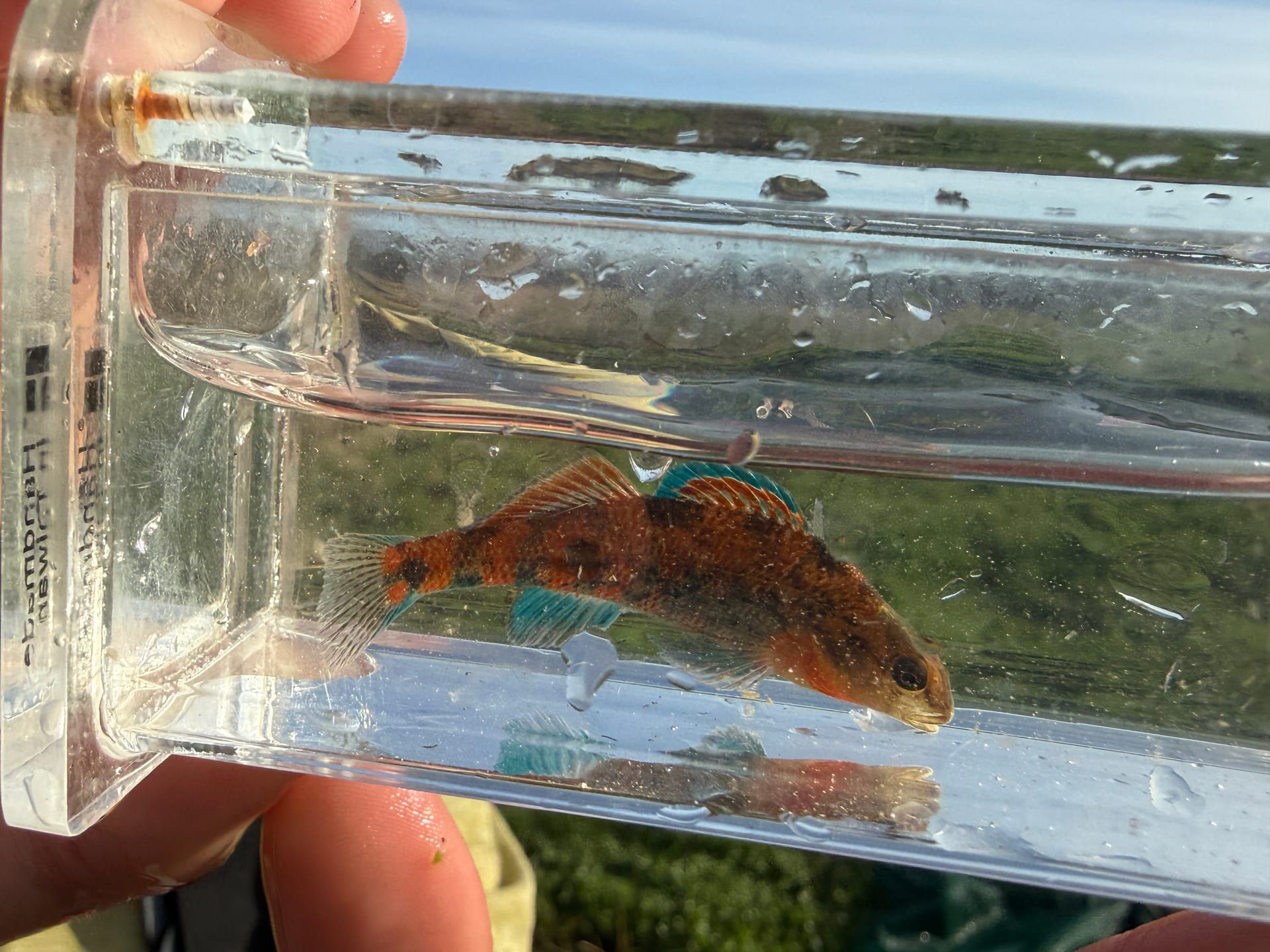
A March 12, 2026 partners meeting in Cave Springs highlighted why Healing Springs Natural Area is Arkansas's most important site for the Least Darter and Arkansas Darter — and why spring-fed habitat, rare species, and streambank stability require coordinated stewardship.
By Friends of Healing Springs Natural Area, Inc.
On March 12, 2026, representatives from state agencies, local leadership, and community members gathered at the Cave Springs Community Center for the Healing Springs Natural Area (HSNA) Partners Meeting. The session — held before Friends of Healing Springs Natural Area, Inc. was formed — centered on a presentation titled Rare Fish Species Drive Protection and Management of Healing Springs Natural Area, prepared by the Arkansas Natural Heritage Commission (ANHC).
After introductions and an open forum on conservation challenges, cooperative management, and recreation goals, participants visited the natural area to walk the cut bank area, discuss Property Owners Association priorities, and observe aquatic life in the spring runs. What they saw on the ground matched the case made in the presentation: this is one of the most significant aquatic sites in Arkansas, and its protection depends on careful management of water, habitat, and eroding streambanks.
Why This Site Was Protected
Healing Springs Natural Area is owned by the Arkansas Department of Transportation and managed under a conservation easement held by ANHC, which added the site to Arkansas’s System of Natural Areas in 2020. Two of the state’s rarest fish — the Least Darter (Etheostoma microperca) and the Arkansas Darter (Etheostoma cragini) — were central to that acquisition.
In Arkansas, both species occur only in the Illinois River watershed, largely in or near the Northwest Arkansas metro area. Relatively few streams meet their requirements. Statewide, only three sites support both species, and partners at the meeting were told that Healing Springs Natural Area is the single most important site for both.
Spring Water and Rare Fish Habitat
The natural area protects a perennial, groundwater-fed stream complex formed by Fulbright Spring and Healing Spring, which flow through Fulbright Branch and Healing Spring Branch into Little Osage Creek. Partners reviewed maps showing roughly 0.87 miles of stream habitat used by Least and Arkansas darters across that spring network.
Both darters are habitat specialists. They require open canopy, limited wooded shoreline, dense aquatic vegetation, fine substrate, cold spring-influenced water, and permanent flow that is steady but not too fast. They cannot persist where those conditions are lost — making erosion, sedimentation, and riparian disturbance ongoing conservation concerns.
The Least Darter is ranked S1 (critically imperiled in Arkansas). Northwest Arkansas populations may represent an undescribed species sometimes referred to as the “Razorback Darter,” with taxonomic work underway. The Arkansas Darter is ranked S1 in Arkansas and G3–G4 globally — also among the state’s most imperiled native fish.
During the site visit, participants observed darters and other native fish in the spring runs — a direct illustration of why stream conditions at this site matter at a statewide scale.
A Broader Aquatic Community
The presentation documented additional rare and sensitive species at Healing Springs Natural Area, including:
- Sunburst Darter, Redspot Chub, and Plateau Darter (state rank S3)
- Meek’s Short-pointed Crayfish and Midget Crayfish (S3), stream-dwelling endemics of the Illinois River watershed
- Osage Burrowing Crayfish (S3–S4), associated with prairie remnants in western Arkansas and eastern Oklahoma
- Western Grotto Salamander (Eurycea spelaea, S2)
- Ozark Cavefish (Troglichthys rosae, S1), a federally threatened species
Near the water, participants also observed Ozark gourd (Cucurbita pepo subsp. ovifera) — a wild relative of the pumpkin and many summer squashes with archaeological use in the Ozarks spanning more than 4,000 years. Its presence along the spring corridor reflects the long human and natural history of this landscape.
Management Priorities Discussed
The presentation emphasized active management needs at the site — particularly quickly eroding banks along Little Osage Creek, with only about 50 feet separating Little Osage Creek from Healing Spring Branch in a priority area. Riparian vegetation was identified as essential to stabilizing banks and maintaining the habitat structure both darters require.
Current priorities identified at the meeting included:
- Long-term stabilization of the eroding bank along Little Osage Creek
- Securing funding for streambank restoration
- Maintaining Healing Springs Natural Area as a natural space the community can enjoy responsibly
These themes — erosion control, watershed protection, and cooperative management among agencies and landowners — later shaped the conservation priorities taken up by Friends of Healing Springs Natural Area, Inc.
From Presentation to Mission
Materials from the March presentation were later shared with the wider community, extending the scientific and stewardship case beyond the partners meeting. The ecological foundation described that day — cold spring water, rare native fish, sensitive aquatic communities, and a watershed under pressure — aligns directly with our mission:
Protect and restore a spring-fed watershed ecosystem through conservation, education, and stewardship.
Friends of Healing Springs Natural Area, Inc. was established to support that work in partnership with ANHC, ARDOT, local landowners, and volunteers. Updates on trail planning, streambank stabilization, and other projects are shared on our News page.
To learn more or get involved in local stewardship, visit Get Involved or contact us.